
Basic Facts
Medical Studies on Melatonin – Basic Facts

Melatonin (N-acetyl-5-methoxytryptamine) is mainly produced in the pineal gland, located in the brain – especially during the night in complete darkness. This is when the melatonin level rises to eight times of the level during the day. This signals to the organism that it is time for the organs and bodily functions to rest, but also to initiate vital repair mechanisms. This makes melatonin the most important internal timer.
Disruptions to cycles caused by light
On the other hand, even the slightest flash of light can affect this critical process, especially the blue light from TVs and smartphones, the light from an alarm clock or street lighting. These everyday appliances have proven to be highly disruptive to our internal cycles and have a substantially adverse impact on our melatonin balance.
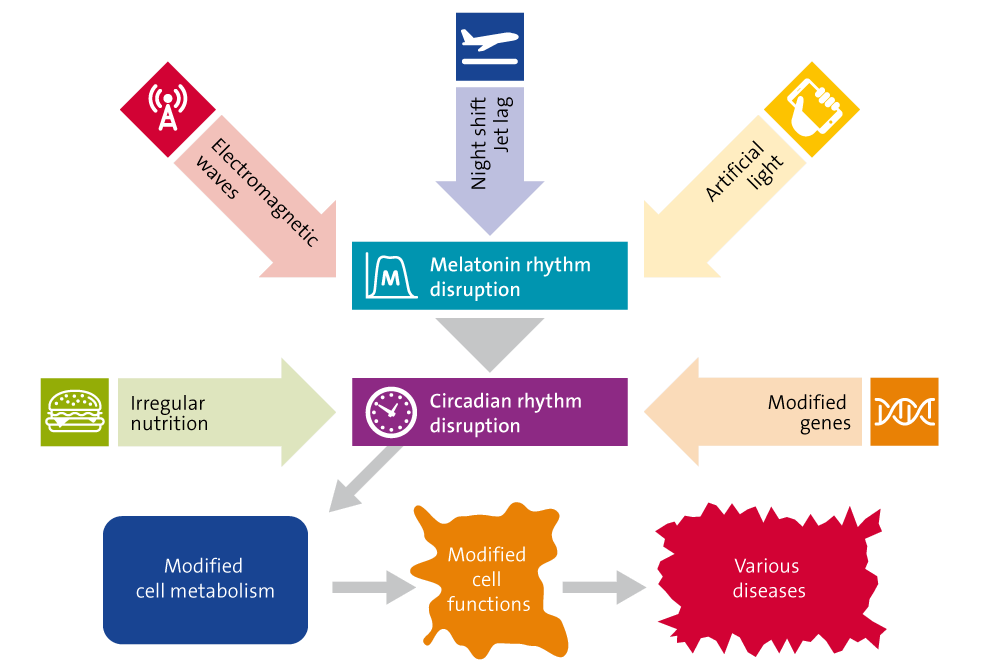
Melatonin keeps our internal clock ticking
Each flash of light passes through the retina to reach the suprachiasmatic nucleus (SCN), which is connected to the pineal gland and serves as a control centre and “master clock” for the brain. Melatonin provides the timing for this internal clock, not only letting the brain know that it should switch to “night mode”, but also passing this information on to every other organ and cell in the body. If this natural mechanism is disrupted by light during the night, this has serious consequences not only for the day/night cycle, but also for the function of the organs and the development and course of many diseases.
Every cell contains melatonin
Only recently did it become known that the “powerhouses” of each cell, the mitochondria, are also capable of producing melatonin. This melatonin is not passed into the blood, but rather is used to regulate certain functions in each of the cells. This production is also partly controlled by the melatonin in the pineal gland, meaning that disorders of the pineal gland can also result in changes in how these cells function, which may result in organ damage, for example.
Medical Studies on Melatonin – Basic Facts
Loading…
Loading…